
Healthy Breakfast Ideas That Keep You Full Until Lunch
Mornings set the tone for the rest of the day, and breakfast is the first chance to give your body steady fuel. If you often feel hungry again an hour after eating, the problem is usually not that you ate too little — it is that your breakfast was missing the ingredients that keep you full. These healthy breakfast ideas are built around a simple formula: protein, fiber, and healthy fat. Together, they slow digestion, steady your energy, and help a morning meal carry you comfortably until lunch. None of these ideas is complicated: most take ten minutes or less and use foods you probably already buy.
Why Protein, Fiber, and Healthy Fat Keep You Full
Think of breakfast as a team effort. Protein takes longer to digest than most carbohydrates, so it helps you feel satisfied for longer after you eat. Fiber adds bulk to a meal and slows the rate at which food leaves your stomach. Healthy fats, found in foods like nuts, seeds, and avocado, add richness and help a meal feel complete. When a breakfast has all three, you get steady energy instead of a quick spike followed by a slump.
Amounts vary from person to person. Body size, activity level, age, and appetite all play a part, so there is no single portion that fits everyone. A useful habit is to check in with yourself: does your breakfast usually keep you comfortable until lunch? If not, try adding a protein food or a fiber-rich food rather than simply eating more of the same thing.
7 Simple Healthy Breakfast Ideas
You do not need seven new recipes. Pick one or two of these ideas to start with, and rotate them through the week. Each one combines protein, fiber, and healthy fat in a different way.
Eggs Any Way You Like Them
Eggs are one of the simplest high-protein breakfast foods, and they are ready in minutes. Scramble them with a handful of spinach, fry one to slide onto whole-grain toast, or boil a batch on Sunday and keep them in the fridge for grab-and-go mornings. Pair eggs with a fiber-rich food — toast, fruit, or roasted potatoes — and you have a balanced plate that holds up well until lunch.
Greek Yogurt Bowls
Plain Greek yogurt is thick, creamy, and naturally high in protein, which makes it a strong base for a filling breakfast. Spoon it into a bowl and add berries or sliced banana for sweetness and fiber, then finish with a spoonful of nuts or seeds for crunch and healthy fat. Plain yogurt with fruit is often sweet enough on its own. Choose plain yogurt when you can: flavored versions often carry a lot of added sugar.
Overnight Oats or Warm Oatmeal
Oats are a fiber-rich base that pairs well with almost anything. For overnight oats, stir rolled oats with milk or yogurt in a jar, add chia seeds and fruit, and leave it in the fridge; in the morning it is ready to eat. If you prefer a hot breakfast, cook oats on the stove or in the microwave and top them with sliced banana, walnuts, and a spoonful of peanut butter.

Smoothies That Actually Fill You Up
A smoothie can be a real breakfast or a sweet drink that leaves you hungry — the difference is what goes in the blender. Start with milk or yogurt for protein, add a banana or a handful of berries, and include a spoonful of peanut butter, chia seeds, or ground flaxseed for healthy fat and fiber. Keep juice out of the mix: whole fruit gives you fiber that juice does not.
Whole-Grain Toast Combos
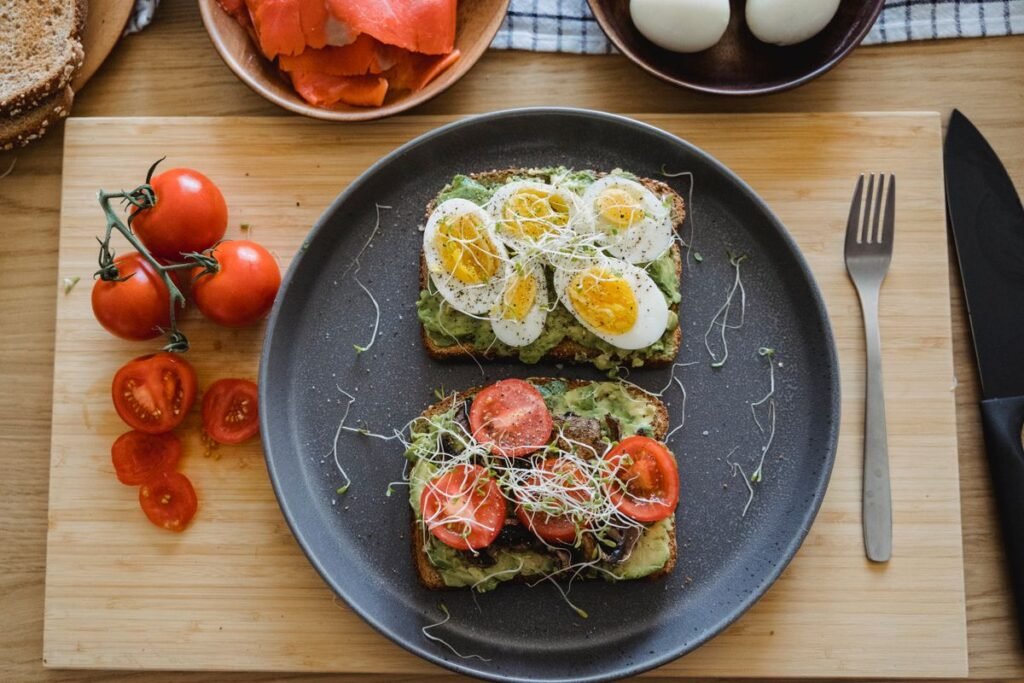
Toast is a breakfast canvas, and whole-grain bread gives it fiber that white bread lacks. Try avocado mashed with a squeeze of lemon and a sliced egg on top, peanut butter with banana slices and a sprinkle of chia seeds, or cottage cheese with sliced tomato and a pinch of black pepper. Each takes about five minutes to put together.
Breakfast Burritos and Wraps
When you want something warm and portable, a breakfast burrito is hard to beat. Scramble eggs with black beans and diced peppers, roll the mixture in a whole-grain tortilla, and add a spoonful of salsa. Make a few on the weekend, wrap them individually, and reheat one on busy mornings.
Cottage Cheese and Fruit
Cottage cheese is an underrated breakfast food: it is high in protein, mild in flavor, and ready the moment you open the container. Serve it with sliced peaches or berries and a sprinkle of chopped walnuts for crunch. On a savory morning, try it with sliced cucumber and tomato instead.
Quick Weekday Options vs. Relaxed Weekend Breakfasts
Weekday breakfasts need to be fast, so lean on the make-ahead ideas: overnight oats, yogurt bowls, hard-boiled eggs, and smoothies you can blend in two minutes. Keep the ingredients in one spot in the fridge so the morning routine is mostly assembly. On weekends, you have room to slow down: a vegetable omelet, whole-grain pancakes with berries, or a breakfast burrito bar where everyone builds their own.
What to Drink with Breakfast
Water is the simplest choice, and a glass alongside breakfast helps you start the day hydrated. Coffee or tea can be part of a balanced morning, too, especially if you keep added sugar light. Milk or a fortified plant milk adds protein and calcium to the meal. Juice is best kept small: an orange gives you fiber and keeps you fuller than a glass of orange juice.
A Simple Formula to Build Your Own Breakfast
You can build a filling breakfast from almost any foods you like by following one pattern: one protein food, one fiber-rich food, and one healthy fat. An egg with whole-grain toast and avocado fits it, and so does yogurt with oats and walnuts. For more ideas on putting balanced plates together, see our guide to Balanced Diet Basics.
A Good Morning Starts with Breakfast
A filling breakfast does not need to be complicated. Start with one idea from this list, keep the protein, fiber, and healthy fat formula in mind, and adjust the portions until the meal carries you comfortably to lunch. If you have specific nutrition needs, talk with your doctor or a registered dietitian. You can read more about Nutriova on our About Us page.
This article is for general information only and is not medical advice. If you have questions about your diet, talk with your doctor or a registered dietitian. See our Disclaimer.